We design products and packaging with sustainability at the core—embedding environmental considerations across the entire lifecycle. From material selection and energy efficiency to end-of-life planning and logistics, our approach reflects our commitment to circularity, climate action, and responsible innovation. We aim to reduce environmental impact while delivering high-performance solutions that meet the needs of our customers and stakeholders.
Developing sustainable products
Applying principles of Design for Environment (DfE) to reduce the environmental footprint of our products and packaging

Sustainable innovation
Our approach to developing sustainable products
- Integrate Design for the Environment (DfE) principles into product development
- Optimize power consumption and data processing efficiency
- Reduce petroleum-based plastic in new product designs
- Replace chemicals of concern with safer alternatives
- Expand opportunities to participate in the circular economy
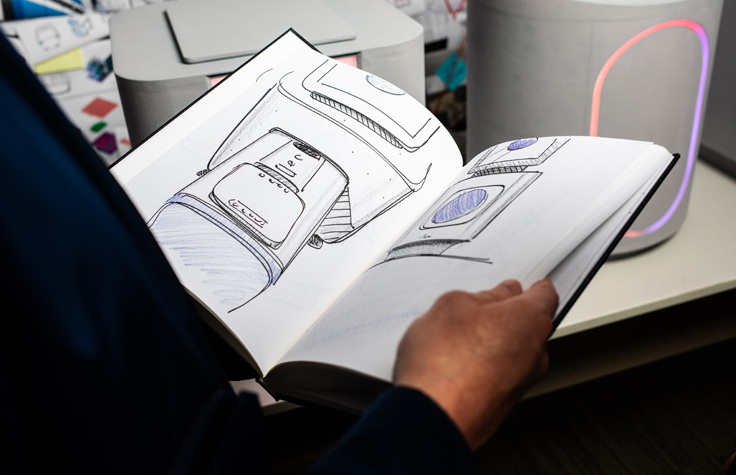
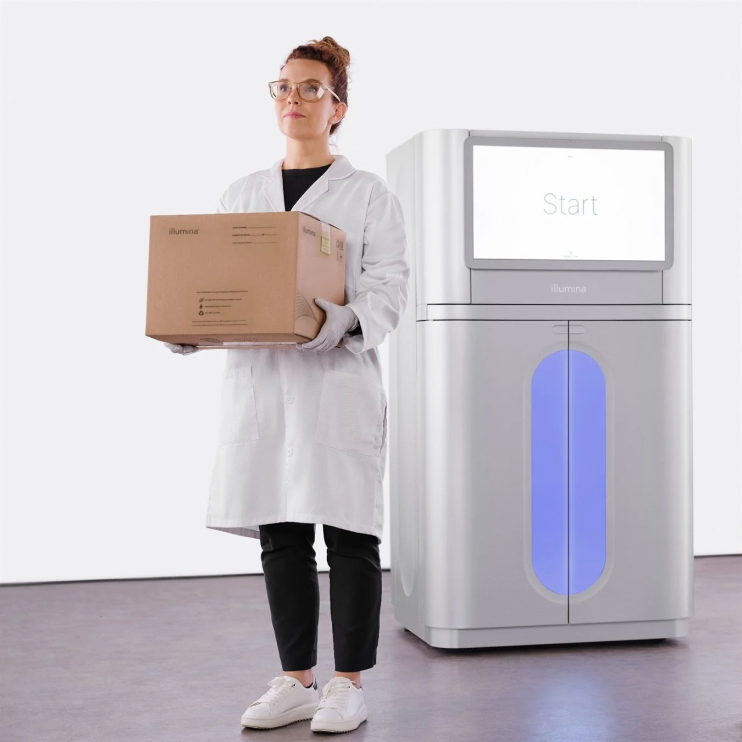
The NovaSeq X Series Systems are purposefully designed to reduce environmental impact
The improved robustness and stability of XLEAP-SBS reagents allows for shipping at ambient temperatures, and reagent consumable plastics are made from sugar-cane based biopolymers. Sustainability was at the forefront of NovaSeq X design, with an aim to move beyond incremental improvements and challenge the status quo to benefit our customers and the planet. Learn more about the NovaSeq X Series.
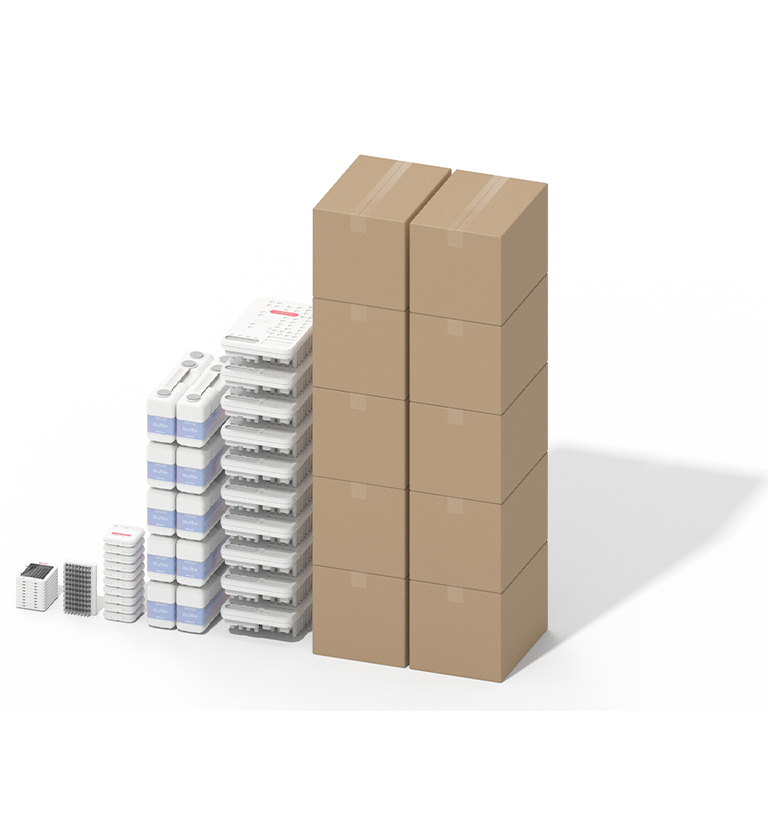
50% less cartridge volume
50% less plastic mass and volume
90% less packaging weight and waste
61% reduction in climate impact1
Ambient temperature reagent shipping
Designed for cartridge disassembly and recycling with no tool required
Plant-based bio-polymer plastics
Data storage optimized for reduced storage and energy requirements
Groundbreaking sustainability innovations
The MiSeq i100 Series delivers our fastest run times yet, breakthrough simplicity, and significant sustainability advancements to empower every lab, everywhere, including:
- Storage – ambient consumables save freezer space, eliminate the need for thawing and expedite sequencing setup time
- Shipping – removal of dry ice, gel packs, and insulated containers expedites the unpacking process and minimizes waste
- Packaging – packaging waste reduced by 85%, based on shipping weight compared to the MiSeq System
- Transportation – CO2 emissions from shipping reagents reduced by 52% compared to the MiSeq System2
- Total carbon footprint - Total carbon footprint reduced by 35% compared to the MiSeq System2

Corporate Responsibility Report
Learn about the progress we have made to shape a healthier future for all.
Sustainable packaging
Packaging plays a critical role in our environmental strategy. We design packaging to be recyclable, returnable, and reusable—reducing waste and environmental impact while maintaining product integrity and performance. Our approach is grounded in circularity and material efficiency, and we continuously seek opportunities to improve across the packaging lifecycle.
We incorporate renewable and recycled materials, eliminate unfavorable substances, and design for recovery and reuse. Our efforts include:
• Reducing single-use packaging and shipping materials through ambient or in-temperature shipping methods.
• Improving volumetric efficiency to reduce shipping emissions.
• Enhancing recyclability and material separation for end-of-life recovery.
• Sourcing materials responsibly.
2030 packaging targets
75% reduction in packaging
50% recyclable primary packaging
90% recyclable or reusable secondary and tertiary packaging
90% reduction in use of dry ice

Returnable insulated containers
Insulated containers used for refrigerated and frozen IVD product shipments can be returned for reuse
- Active ocean containers transit enables removal of passive insulated containers and coolant materials while still keeping product in ideal storage temperature with real time monitoring
- Diverted over 150,000 kilograms of packaging material from landfills
- Optimal pallet patterns increased logistics efficiencies up to 250%

Crate reuse program
Established a crate reuse program for instrument shipments within the continental United States.
- Over 75 instrument crates, including their ancillary components returned for reuse
- 17,000 kilograms of instrument packaging diverted from landfills
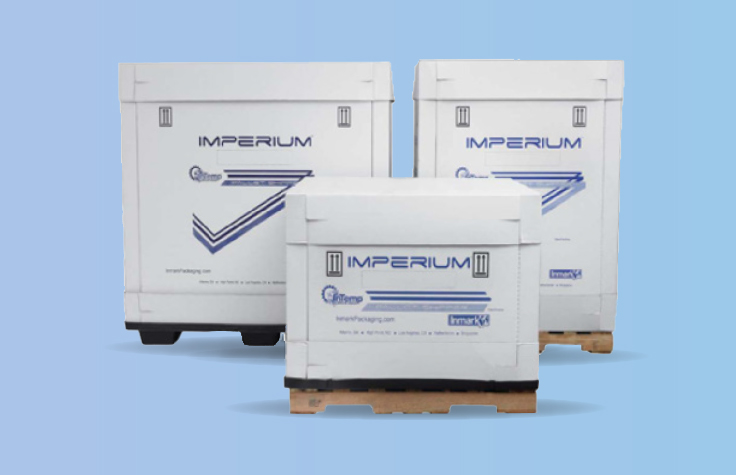
Sustainability in insulated containers
We strive for continuous improvement, increasing global adoption, and decreasing our environmental footprint for ongoing insulated container initiatives.
- Returnable: Insulated containers for refrigerated and frozen in-vitro diagnostic (IVD) products can be returned for reuse. Every container returned diverts 34 kilograms of waste from landfills
- Reusable: Insulated pallet shippers for frozen and refrigerated products are validated for multiple uses, supporting both internal network movements and customer bulk orders
- Recyclable: Where possible, Illumina uses plant-based insulated containers which require less energy and can be composted or recycled using standard paper recycling streams
Other highlights
- 100% paper packaging made of recycled and recyclable material
- Elimination of bubble wrap – replaced with dunnage paper
- NextSeq 1000/2000 reagent cartridge disassembly for recycling optimization
- Corrugated ambient shipping boxes transition to 100% recycled content
- Replaced outer double barrier bags in NextSeq 1000/2000 with single easy-open pouch
- Refrigerated shipment gel packs consist of recyclable wrapper
- Dry ice elimination for key internal product transfers
- Flow cell ambient ship
- Expanded distribution network to reduce transit times, reduce air travel, and reduce packaging
- Optimized shipping coolant quantity based on customer destination
References
- Based on comparison of NovaSeq 6000 reagent kits and NovaSeq X reagent kits per 1 gigabase (Gb) of genetic code. The project aligned with the methodological requirements and guidelines of the ISO standards ISO 14040 (2006a) and ISO 14044 (2006b) on LCA and the GHG Protocol Product Life Cycle Accounting and Report Standard (WRI/ WBCSD, 2011). However, as it is a streamlined LCA study, it does not fulfill all of the reporting requirements of these standards.
- Based on comparison of MiSeq reagent kits to MiSeq i100 reagent kits per 1 gigabase (Gb) of genetic code; measured in Global Warming Potential through an LCA aligned with the methodological requirements and guidelines of the ISO standards ISO 14040 (2006a) and ISO 14044 (2006b) on LCA and the GHG Protocol Product Life Cycle Accounting and Report Standard (WRI/ WBCSD, 2011). However, as it is a streamlined LCA study, it does not fulfill all of the reporting requirements of these standards.