Next-generation sequencing (NGS)

Learn how NGS technology works and what it can do for you

Female scientist holding a single pipette filled with clear liquid in one hand and a tube in the other; blurry scientists are moving in the background; two MiSeq i100 instruments are mid-run on the lab bench behind the scientist.

What is next-generation sequencing?

Next-generation sequencing (NGS) is a massively parallel sequencing technology that offers ultra-high throughput, scalability, and speed. The technology is used to determine the order of nucleotides in entire genomes or targeted regions of DNA or RNA. NGS has revolutionized the biological sciences, allowing labs to perform a wide variety of applications and study biological systems at a level never before possible.

Today's complex genomics questions demand a depth of information beyond the capacity of traditional DNA sequencing technologies. NGS has filled that gap and become an everyday tool to address these questions.

Applications of NGS

Next-generation sequencing technology has fundamentally changed the kinds of questions scientists can ask and answer. Innovative sample preparation and data analysis options enable a broad range of applications. For example, NGS allows labs to:

  • Rapidly sequence whole genomes

  • Deeply sequence target regions

  • Study the human microbiome

  • Analyze epigenetic factors such as genome-wide DNA methylation and DNA-protein interactions

  • Sequence cancer samples to study rare somatic variants, tumor subclones, and more

  • Use RNA sequencing (RNA-Seq) to discover novel RNA variants and splice sites, or quantify mRNAs for gene expression analysis

  • Identify novel pathogens

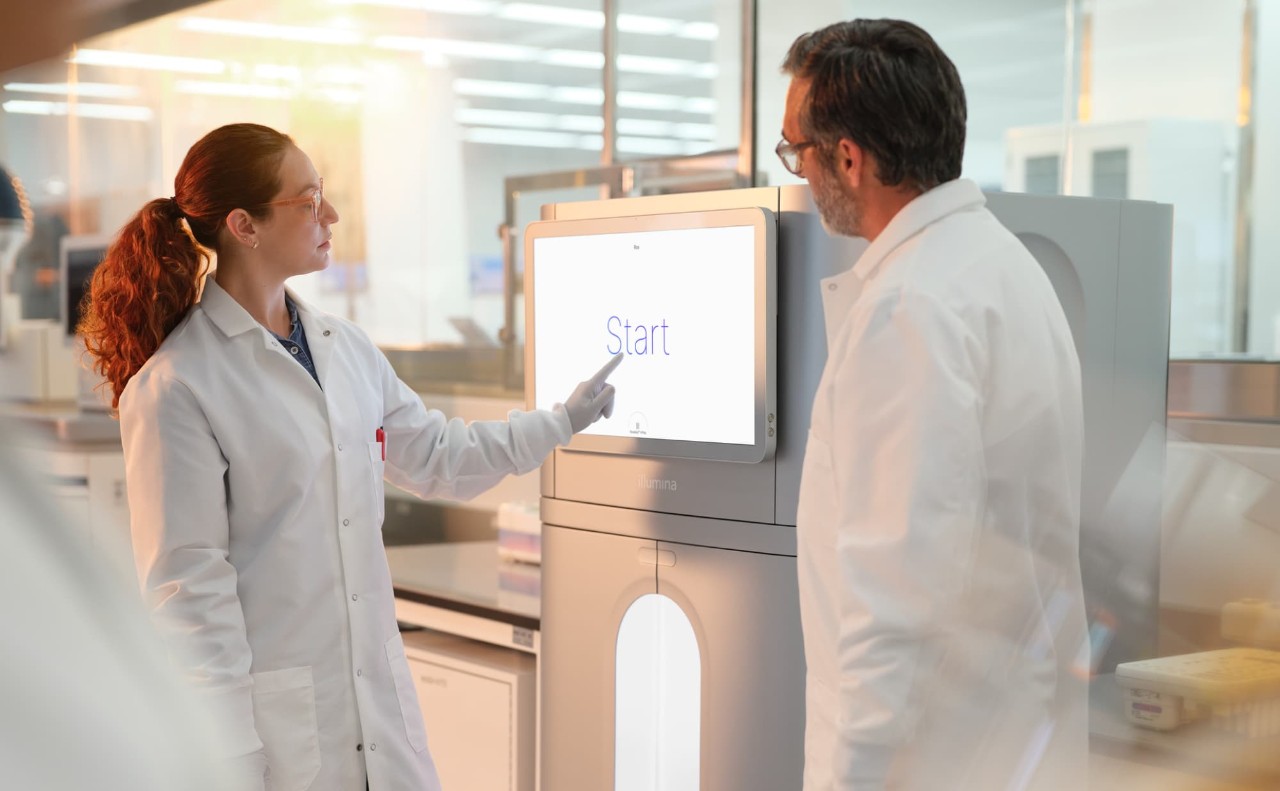
Male and female scientists touching start screen to begin run on the NovaSeq X. Consumables on lab bench next to the instrument and close up blurry image of a scientist walking in the foreground.

Next-generation sequencing for beginners

We'll guide you through the basics of NGS, with tutorials and tips for planning your first experiment.

How does Illumina NGS work?

Illumina NGS technology uses a fundamentally different approach from the classic Sanger chain-termination method. It leverages sequencing by synthesis (SBS) chemistry—tracking the addition of labeled nucleotides as the DNA chain is copied—in a massively parallel fashion.

Next-generation sequencing technology generates masses of DNA sequencing data, and is both less expensive and less time-consuming than traditional Sanger sequencing.1,2 Illumina sequencing systems can deliver data output ranging from 300 kilobases up to multiple terabases in a single run, depending on instrument type and configuration.

Thumbnail

New to NGS eBook

Download our Getting started with next-generation sequencing eBook to explore NGS applications, benefits, and a practical workflow covering sample isolation, library preparation, sequencing, and data analysis for laboratories adopting NGS.

NGS workflow

The next-generation sequencing workflow includes the following steps: library preparation, sequencing, and data analysis.

1
Library preparation
2
Sequencing
3
Data analysis

Key benefits of NGS

Accessible whole-genome sequencing

Using capillary electrophoresis–based Sanger sequencing, the Human Genome Project took over 10 years and cost nearly 
$3 billion.

Next-generation sequencing, in contrast, makes large-scale whole-genome sequencing (WGS) accessible and practical for the average researcher. It enables scientists to analyze the entire human genome in a single sequencing experiment, or sequence thousands to tens of thousands of genomes in one year.

Broad dynamic range for expression profiling

NGS-based RNA-Seq is a powerful method that enables researchers to break through the inefficiency and expense of legacy technologies such as microarrays. Microarray gene expression measurement is limited by noise at the low end and signal saturation at the high end.

In contrast, next-generation sequencing quantifies discrete, digital sequencing read counts, offering a broader dynamic range.3,4,5

Tunable resolution for targeted NGS

Targeted sequencing allows you to sequence a subset of genes or specific genomic regions of interest, efficiently and cost-effectively focusing the power of NGS. NGS is highly scalable, allowing you to tune the level of resolution to meet experimental needs. Choose whether to do a shallow scan across multiple samples or sequence at greater depth with fewer samples to find rare variants in a given region.

Learn about:

Advances in NGS technology

Illumina innovation roadmap

NGS innovations that enable basic and clinical researchers to perform cutting-edge multiomics applications and turn data into insights.

Benchtop sequencing

Cost-efficient, user-friendly solutions for low and mid-throughput applications and for library quality control (QC) prior to large-scale studies.

High-throughput sequencing

Advanced chemistry, optics, and informatics to power NGS applications and generate dramatically more data for deeper insights.

Data quality enhancements

Sequencing solutions in development to deliver Q70 quality score for duplex sequencing and Q50 for simplex sequencing.

How scientists use NGS

See how researchers in different fields use next-generation sequencing to make breakthrough discoveries.

Expand your research with multiomics

Combine data from genomics, transcriptomics, epigenetics, and proteomics to achieve a more comprehensive understanding of molecular changes contributing to disease, cellular response, and development. Perform multiomic experiments using NGS to identify biomarkers, connect genotype to phenotype, and more.

Start using NGS

System buying guidance

The resources below offer valuable guidance to scientists who are considering purchasing a next-generation sequencing system.

NGS platform comparison tables

View benchtop and production-scale sequencers, compare features, and learn how to choose the right NGS platform for your needs.

Buyer's guide

Read our NGS System Buyer's Guide to determine what factors to consider before making your purchase.

NGS experimental considerations

Learn about read length, coverage, quality scores, and other experimental considerations to help you plan your sequencing run. Use our interactive tools to help you select the right products and methods for your project.

Resources for NGS labs

Sequencing methods

Explore a broad range of methods, from whole-genome sequencing to mRNA-Seq, exome sequencing, single-cell sequencing, and more.

High-throughput sequencing

Process more samples to improve statistical power. Cost-effectively run data-rich applications using the latest large-scale sequencers. 

Library prep automation

Explore automated liquid-handling solutions designed to help labs prepare large quantities of NGS libraries.

NGS data storage

Securely store vast quantities of NGS and other genomics data.

Educational webinars

Transforming human genetics with Perturb-Seq

Illumina leaders Rami Mehio and Dr Kyle Farh explore how modern informatics platforms and AI are transforming human genetics, spanning routine clinical research workflows to national-scale initiatives.

NGS FAQ

Sequencing by synthesis achieves high data accuracy compared to other sequencing chemistries or earlier generation methods through the use of fluorescently labeled reversible terminators that are incorporated, imaged, and cleaved from a growing DNA strand to enable base-by-base sequencing. This tightly controlled process ultimately improves base calling accuracy and reduces miscalls associated with strings of repeated nucleotides (homopolymers).1

Learn about advancements in SBS technology with XLEAP-SBS chemistry, our highest quality, fastest, and most robust SBS chemistry to date.6

Watch our sequencing reimagined webinar to learn about groundbreaking Illumina sequencing innovations.

NGS is used in cancer research to identify genomic biomarkers and characterize the molecular profile of tumors through methodologies such as liquid biopsies and Comprehensive Genomic Profiling (CGP). While there are several conventional low-throughput tools to interrogate parts of the genome, transcriptome, proteome, and epigenome, NGS allows scientists to characterize the entirety, or a substantial portion, of any “ome” in a single experiment. NGS also allows researchers to detect low-frequency molecular events associated with carcinogenesis, cancer growth, and metastasis. These drivers of disease could be missed using traditional molecular methods.7

Watch the multiomics insights for next-generation cancer research webinar to learn how multiomics is advancing cancer research at an unprecedented scale.

Learn about advancing cancer genomics research through NGS.

A multiomics approach with NGS integrates data across multiple “omes” (eg, the genome, transcriptome, and proteome) to characterize biological complexity. The approach allows researchers to add context to genetic variants and link DNA mutations with gene expression and protein activity. Furthermore, gaining insight into how each of these biological systems interacts under varying conditions helps researchers elucidate complex regulatory networks.8

Visit the multiomics page to learn about our solutions powered by NGS to enable your next multiomics profiling study and analysis.

Labs scale their NGS capabilities by increasing throughput across several pillars via system upgrades, laboratory automation, application versatility, and data infrastructure for robust informatics pipelines: 

  • Instrumentation upgrades: Transitioning from low-throughput benchtop sequencing systems for smaller-scale studies to production-scale, high-output systems that increase the data output per run (eg, hundreds to thousands of samples in a single run) 
 
  • Laboratory automation: Implementing liquid-handling and library prep automation to reduce hands-on-time and improve reproducibility 
  • Application versatility: Choosing systems that provide versatility and scalability to accommodate a large ecosystem of methods, from whole-genome sequencing (WGS) to single-cell RNA-Seq (scRNA-Seq)
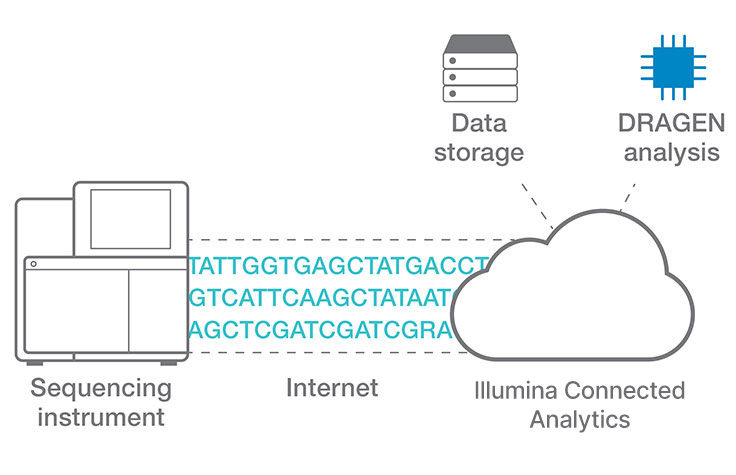
  • Data infrastructure: Expanding laboratory information management systems (LIMS) and bioinformatics capabilities with high-performance computing (HPC) or cloud-based pipelines to manage the secondary analysis, storage, and sharing of NGS data. 

To assist with your lab’s growing sequencing needs, Illumina offers a comprehensive ecosystem of scalable sequencing systems and workflow support. This includes benchtop and production-scale high-throughput configurations, highly efficient library prep kits, advanced data analysis solutions, and educational guides to aid your sequencing requirements.

Explore our sequencing platforms page for guidance on selecting the NGS system that meets your research goals and laboratory needs.

When planning an NGS experiment, researchers should consider several critical factors based on their sequencing needs: 

  • Input amount: The required quality and quantity of starting nucleic acid 
  • Read length: The number of base pairs that are sequenced per read 
  • Sequencing depth: The number of times a given region is read 
  • Throughput: The total volume of data generated per sequencing run 
  • Data analysis: The computing resources, storage capacity, and bioinformatic tools to assist with alignment, quantification, and interpretation9

Watch the planning and preparing your first NGS project webinar to make a successful leap into NGS. 

Visit our coverage depth recommendations page to learn how to estimate the depth of sequencing coverage and explore other tips to help plan your NGS experiment.

/ Results

Genomics news

Additional resources

RNA sequencing (RNA-Seq)

RNA-Seq uses next-generation sequencing to analyze expression across the transcriptome, enabling scientists to detect known or novel features and quantify RNA.

Sequencing services

Access fast, reliable next-generation sequencing services that provide high-quality data and offer extensive scientific expertise.

NGS and microarray training

Work with expert Illumina instructors and get hands-on training. We also offer online courses, webinars, videos, and podcasts.

Speak to a specialist

Talk to an expert to learn more about NGS.

References

  1. Bentley DR, Balasubramanian S, Swerdlow HP, et al. Accurate whole human genome sequencing using reversible terminator chemistry. Nature. 2008;456(7218):53-59. doi:10.1038/nature07517 
  2. Shendure J, Ji H. Next-generation DNA sequencing. Nat Biotechnol. 2008;26(10):1135-1145. doi:10.1038/nbt1486
  3. Wang Z, Gerstein M, Snyder M. RNA-Seq: a revolutionary tool for transcriptomics. Nat Rev Genet. 2009;10(1):57-63. doi:10.1038/nrg2484
  4. Wilhelm BT, Landry JR. RNA-Seq-quantitative measurement of expression through massively parallel RNA-sequencing. Methods. 2009;48(3):249-257. doi:10.1016/j.ymeth.2009.03.016
  5. Zhao S, Fung-Leung WP, Bittner A, Ngo K, Liu X. Comparison of RNA-Seq and microarray in transcriptome profiling of activated T cells. PLoS One. 2014;9(1):e78644. Published 2014 Jan 16. doi:10.1371/journal.pone.0078644
  6. Compared to standard Illumina SBS chemistry. 
  7. Isaic A, Motofelea N, Hoinoiu T, et al. Next-Generation Sequencing: A Review of Its Transformative Impact on Cancer Diagnosis, Treatment, and Resistance Management. Diagnostics (Basel). 2025;15(19):2425. Published 2025 Sep 23. doi:10.3390/diagnostics15192425 
  8. Ren Y, Bai H, Wang J, Yang Y, Wang Y. Deep Learning-Enabled Multi-Omics Integration: A New Frontier in Precise Drug Target Discovery. Biology (Basel). 2026;15(5):410. Published 2026 Mar 2. doi:10.3390/biology15050410 
  9. Maljkovic Berry I, Melendrez MC, Bishop-Lilly KA, et al. Next Generation Sequencing and Bioinformatics Methodologies for Infectious Disease Research and Public Health: Approaches, Applications, and Considerations for Development of Laboratory Capacity. J Infect Dis. 2020;221(Suppl 3):S292-S307. doi:10.1093/infdis/jiz286