Details
Illumina Protein Prep is now Illlumina SomaSeq Discovery.
For more information, visit the Illumina SOMAmer Proteomics page.
Understanding how the human body adapts to extreme environments, such as spaceflight and endurance athletics, offers a window into fundamental mechanisms of physiological resilience.
As part of the Space Omics and Medical Atlas (SOMA), Christopher Mason and colleagues profiled over 60 astronaut biospecimens — including from the Polaris Dawn mission — using high-throughput proteomics platforms, including Illumina SomaSeq Discovery. These proteomic datasets were integrated with spatial transcriptomics (STAMP, CosMx), spatial proteomics (Molecular Pixelation), and whole-genome sequencing, enabling a multi-resolution atlas of systemic responses to spaceflight.
The team observed coordinated proteogenomic changes involving immune remodeling, oxidative stress, and hematopoietic signaling, with particular shifts in T cells, monocytes, and progenitor populations. In-depth proteomes (>9,400 proteins) enabled resolution of low-abundance analytes that correlated with transcriptomic and spatial signatures. Extending the same workflow to terrestrial comparators, the team identified overlapping and divergent molecular pathways of adaptation. These findings demonstrate how scalable proteomic pipelines can be integrated into longitudinal, multi-omics frameworks to study physiological stress and support future precision health applications.
Speaker
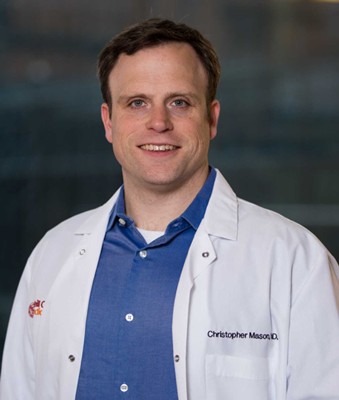
Christopher E. Mason, PhD
Professor of Physiology and Biophysics
Weill Cornell Medicine
Christopher Mason completed his bachelor's degree at the University of Wisconsin–Madison, majoring in both genetics and biochemistry. He undertook his doctoral and postdoctoral training at Yale University before joining Weill Cornell Medicine in New York as an assistant professor. He is now the WorldQuant endowed professor and director of the Initiative for Quantitative Prediction. He is also the co-director of the Trivedi Institute of Space and Global Biomedicine, co-founder and global director at Biotia, founder of the MetaSUB Consortium and BioAstra, and author of The Next 500 Years: Engineering Life to Reach New Worlds, The Age of Prediction, and Speciespoiesis.
The Mason Laboratory develops and deploys new biochemical and computational methods in functional genomics to elucidate the genetic basis of human disease and human physiology. The lab also creates and deploys novel techniques in next-generation sequencing and algorithms for tumor evolution, genome evolution, DNA and RNA modifications, and genome/epigenome engineering. His group works with government and commercial spaceflight providers to build integrated molecular portraits of astronauts, which help establish the molecular foundations and genetic defenses for enabling long-term human spaceflight. Mason was named as one of Popular Science’s “Brilliant Ten” scientists and has been featured as a TEDMED speaker. He has cofounded 12 biotechnology startup companies and serves as an advisor to many others.
Get instant access to the webinar—just fill out this quick form.
- Date & Time
- 31 Mar. 2026
- Topic
- Cell & molecular biology research, Immunology, Precision health, Library preparation kits