Entering the ‘Data First’ Era
Why Single-Cell Analysis Is Becoming the Starting Point of Research
Entering the ‘Data First’ Era - Why Single-Cell Analysis Is Becoming the Starting Point of Research
Introduction
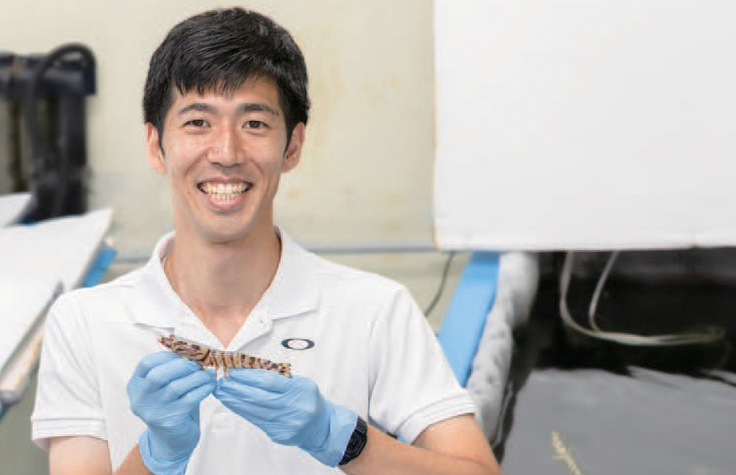
Dr. Keiichiro Koiwai of Tokyo University of Marine Science and Technology conducts research on the immune mechanisms of marine invertebrates, with a particular focus on shrimp species. His work aims to address disease challenges in aquaculture and has long incorporated advanced technologies such as microfluidics and droplet-based methods.
In this interview, Dr. Koiwai shares his perspective as a researcher with extensive experience in single-cell analysis, discussing the background behind adopting Illumina Single Cell Prep (PIPseq™), his experience using the technology, and his expectations for future developments.
Q. Could you tell us about your research and how single-cell analysis has been integrated into your work?
Dr. Keiichiro Koiwai (KK): My research focuses on understanding the immune mechanisms of marine invertebrates, particularly shrimp species. At Tokyo University of Marine Science and Technology, I conduct immunology research aimed at improving disease management in shrimp aquaculture, which is practiced worldwide, with the goal of making aquaculture more efficient and sustainable.
As part of this work, I have also been involved in developing cellular markers. However, compared to vertebrates, immunological research in invertebrates is still relatively underdeveloped, and commercially available monoclonal antibodies are limited. As a result, identifying cell types and analyzing their functions has been a significant challenge.
My introduction to single-cell analysis began when I was working in an engineering laboratory and learned about microfluidic technologies. Around that time, Drop-seq was introduced, and the necessary reagents became available in Japan. I started building my own microfluidic devices and conducting single-cell RNA sequencing experiments. Since then, I have used these approaches for cell population classification and novel marker discovery. Today, I also apply droplet-based technologies to isolate beneficial bacteria and investigate their functions.
Q: What led you to evaluate and adopt Illumina Single Cell Prep? Among the many single-cell analysis solutions available, what particularly caught your attention?
The greatest advantage was the ability to move seamlessly into sequencing as part of an Illumina solution. The fact that no dedicated instrument is required was also highly attractive.
KK: The biggest factor was that, as part of an Illumina solution, it could seamlessly integrate with downstream sequencing workflows. Another major advantage was that it does not require a dedicated instrument.
Previously,we had been performing analyses using self-fabricated microfluidic devices. However, issues such as channel clogging occurred frequently, and experimental success often depended on the operator’s experience. We were therefore looking for a solution that offered greater reproducibility and was easier to adopt.
In fact, I had been interested in PIPseq for some time. However, when it was only available in the United States, accessibility and cost made adoption challenging. Once Illumina officially launched the product in Japan, it became much easier for us to obtain and evaluate the technology with confidence.
Q: After using the system, what aspects have been most impressive? Were your expectations met in terms of usability, workflow, and data quality?
KK: What impressed me most was how easy the system is to use. The protocols are well established, allowing us to progress smoothly through library preparation even when working with a workflow for the first time. It delivered exactly the level of usability I had expected before implementation.
Students in our laboratory who previously worked with Drop-seq have also commented that the workflow is much easier because there is no need to worry about microfluidic channel clogging. Compared with conventional microfluidics-based methods, the experimental burden has been significantly reduced.
In terms of data quality, the results were comparable to the Drop-seq datasets we have generated in the laboratory as well as those obtained using MGI’s single-cell solution. While there were certain differences in sensitivity compared with the 10x Genomics Chromium platform, I understand these differences to be largely attributable to methodological distinctions, such as whether reverse transcription is performed within individual droplets or after cell lysis in bulk. When compared with technologies in the same category, I did not find any major shortcomings in the performance of PIPseq.
Q: How has Illumina Single Cell Prep changed the way you design experiments, conduct research, or generate insights?
KK: One of the biggest changes has been that experimental planning has become much more straightforward. Previously, we had to consider many individual factors, including microfluidic device preparation, reagent composition, and bead management. Now, we can estimate requirements much more easily, for example by calculating costs based on the number of cells to be analyzed. This has improved visibility across the entire research project.
Just as NGS-based transcriptome analysis evolved from a specialized technique into a standard approach, single-cell analysis will become a routine part of early-stage research.
The system has also made it easier to initiate collaborative research projects. Because we can clearly explain the workflow and expected outcomes, it is much easier to discuss study designs with collaborators and develop projects together.
More broadly, I believe that the research workflow itself will continue to evolve. Just as NGS-based transcriptome analysis transitioned from being a specialized technology to a standard research method, I expect single-cell analysis to become a routine part of the early stages of research. Researchers will first use single-cell analysis to gain a comprehensive understanding of cell populations and then move on to targeted functional studies. I believe this approach will become increasingly common in the future.
Q: Looking ahead, what improvements or additional capabilities would you like to see in the product or workflow?
KK: I would like to see continued optimization of the workflow, particularly in areas that could enable greater RNA recovery per cell. This could result in more informative datasets and support higher-quality analyses.
I also believe a training kit would be highly valuable for researchers who are new to single-cell analysis. For example, if someone is using a vortex-based droplet generation system for the first time, it would be helpful to have a practice kit that allows them to check droplet formation and cell encapsulation before using production reagents from the Illumina Single Cell Prep kit. Such a resource would make adoption more approachable for beginners and help lower the psychological barrier to implementation.
Q: Finally, what message would you like to share with researchers who are interested in single-cell analysis but have not yet taken the first step?
KK: Adopting new technologies is extremely important in modern life science research. Advances in technology fundamentally change what we can see and understand, and embracing new analytical approaches is essential to avoid missing valuable biological insights. Illumina Single Cell Prep is offered at a relatively accessible price point and does not require expensive dedicated instrumentation. For projects involving a modest number of samples, researchers may even be able to share kits with colleagues. As long as a laboratory has the ability to isolate cells, I believe this is a system that many researchers can successfully implement.
Generate data first, then let the data guide your next steps. Single-cell analysis is a powerful tool for taking that first step toward discovery.
My advice is simple: generate data first. In many cases, the first dataset leads directly to the next research idea or a completely new discovery.
This is especially true for research involving non-model organisms, where it is often difficult to establish a perfect protocol from the outset. That is precisely why obtaining data first and deciding the next steps based on what the data reveal is so important. Single-cell analysis is an incredibly powerful tool for taking that first step, and I strongly encourage researchers to take advantage of it.
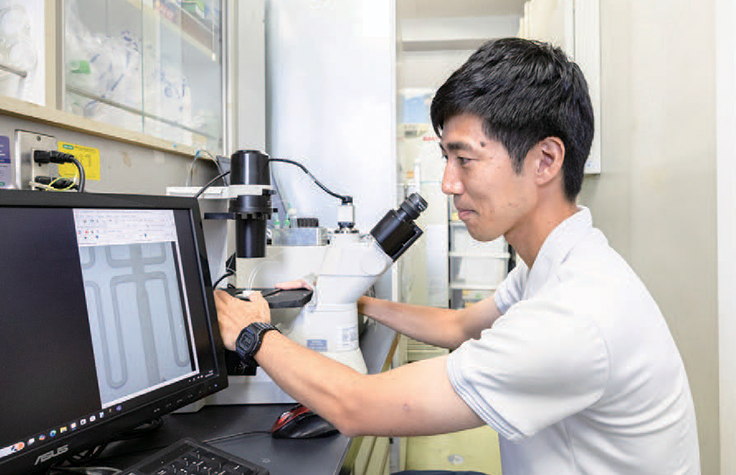
Associate Professor
Laboratory of Genome Science
Tokyo University of Marine Science and Technology.