Human Whole-Genome Sequencing

An unbiased view of the entire human genome
Human whole-genome sequencing (WGS) offers the most detailed view into our genetic code. WGS has the ability to evaluate every base in the genome and navigate the complexity of genomic variants that make us unique.
Previously a challenging application, human whole-genome sequencing is now one of the simplest. Advances in library preparation, sequencing, bioinformatics, and variant analysis have made it possible to go from sample to report in less than 30 hours. Whether you’re performing a comprehensive genomic evaluation or using the genome as a foundation for other studies, human whole-genome sequencing has never been more accessible.
Comprehensive variant detection with human WGS
The human genome is complex, with variations from small, single nucleotide changes to large chromosomal rearrangements, and virtually everything in between. Human whole-genome sequencing is the most comprehensive application for detecting all of these variant types in a single assay.1–8
Variant types include:
- Single nucleotide variants (SNVs)
- Insertions and deletions (Indels)
- Structural variants (SVs)
- Copy number variants (CNVs)
- Repeat expansions
- Mitochondrial DNA (mtDNA) variants
- Paralogs
Production-scale whole-genome sequencing workflow
Illumina Genomics Architecture v3 delivers a streamlined, scalable solution for high-throughput human WGS with the NovaSeq X Plus System—reducing manual effort and turnaround time for consistent, site-ready results.
Download technical note
Expanded genomics insights from long-distance data
Resolve challenging-to-map regions of the genome, generate phased sequencing data, and simplify your sequencing workflow. Illumina mapped read technology enhances short-read genome sequencing with long-distance information for exceptional genome mapping and insights.
Learn more about mapped read technologyFeatured human whole-genome sequencing workflow
Our three-step human whole-genome sequencing workflow provides a fully featured, rapid solution for labs. The resulting WGS delivers high-quality insights across the entire genome for all variant classes.
Library preparation
Sequencing
Data analysis
Featured workflow products
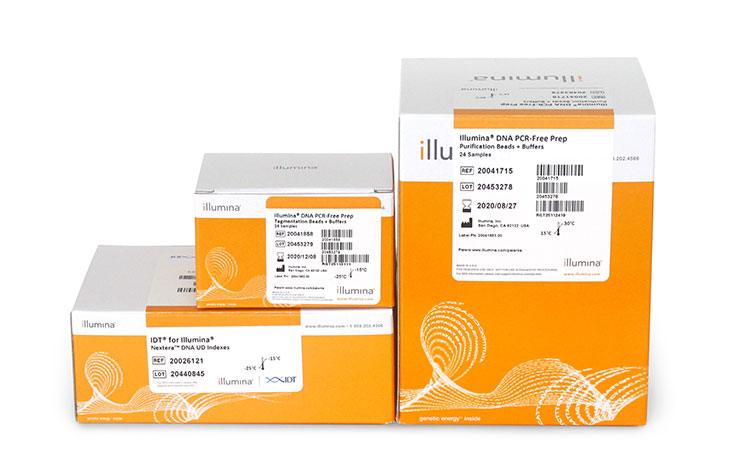
Illumina DNA PCR-Free Prep
A high-performing, fast, and integrated workflow for sensitive applications such as human whole-genome sequencing.
View Product
NovaSeq X Series ordering
Extraordinary throughput and accuracy to perform data-intensive applications at production scale.
View systemThe Genomic Insights Webinar Series
Listen as experts in the field share how their work helps researchers find answers with human whole-genome sequencing.
Watch nowCalling CNVs and SVs with WGS
Andrew Gross, PhD and Shimul Chowdhury, PhD present recent advances calling CNVs and SVs from WGS.
The genome’s most difficult puzzles
Mike Eberle, PhD discusses advances in WGS bioinformatics for calling repeat expansions and paralogs.
The “fully featured” genome
Eric Rush, MD and Tanner Hagelstrom, PhD, FACMG discuss comprehensive variant calling with WGS in a rare disease laboratory.
Bioinformatics innovation for human WGS
Some of our software for analyzing human WGS data is available on open-source platforms, allowing the bioinformatics community to collaborate, test, and ultimately improve these tools.
SpliceAI
SpliceAI is a deep neural network that accurately predicts splice junctions. Splice mutations are especially common in rare disease, autism spectrum disorders, and intellectual disability.9
View open sourceExpansionHunter
ExpansionHunter can be used to detect large expansions of short tandem repeats, which have been shown to cause diseases like Fragile X syndrome, amyotrophic lateral sclerosis, Friedreich ataxia, Huntington’s disease, and other disorders.10,11
View open sourcePrimateAI
PrimateAI is a deep neural network using hundreds of thousands of common variants from six non-human primate species. It allows for systematic identification of pathogenic variants in humans.12
View open sourceSMNCopyNumberCaller
Spinal muscular atrophy is caused by loss of the SMN1 gene, but analysis can be challenging because SMN1 and SMN2 are nearly identical. This software accurately identifies SMN1 and SMN2 copy number from human whole-genome sequencing data.13
View open sourceHow scientists use human WGS

Human whole-genome sequencing best practices
Dr Christian Marshall of The Hospital for Sick Children explains how best practices can help enable WGS for genetic diseases.

WGS drives innovation in rare disease research
Dr Matt Might is Professor and Director of the Hugh Kaul Precision Medicine Institute. His son, Bertrand, was the first person diagnosed with NGLY1 deficiency, an ultra-rare disorder.

From exomes to whole genomes
The DRAGEN secondary analysis platform enables GeneDx to scale to whole-genome analysis and identify variants with precision.
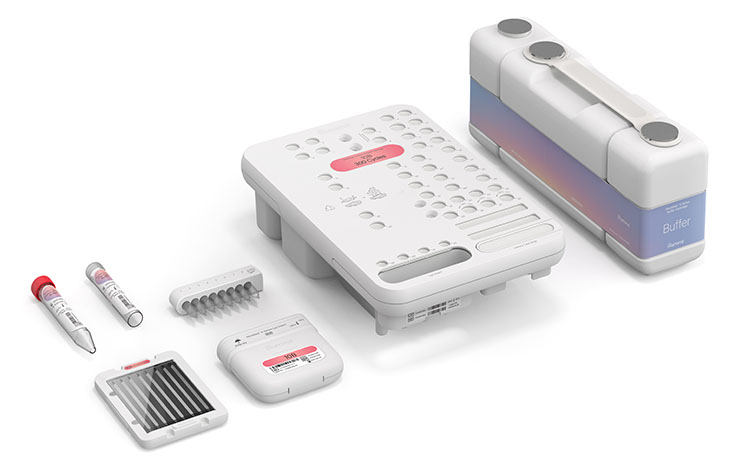
The debut of XLEAP-SBS chemistry
NovaSeq X Series Reagent Kits are powered by a faster, more accurate, and robust update to traditional sequencing by synthesis (SBS) chemistry that supports consistent, reliable data generation for results you can trust. Improvements in XLEAP-SBS reagents allow for shipping and storage in lyophilized form, minimizing environmental impact for significant reductions in packaging size, weight, plastic mass, and waste.
View kitsHuman whole-genome sequencing publications
The Medical Genome Initiative
The consortium was formed to provide practical guidance and support the development of standards for the use of clinical whole-genome sequencing.
Read publicationWGS captures diverse spectrum of disease-causing genetic variation
This paper compares whole-genome sequencing to chromosomal microarray analysis for identifying different types of genetic variants.
Read publicationPower of WGS for rare diseases in underserved areas
An Illumina program demonstrates the benefits of WGS in a resource-limited dysmorphology clinic in northern Mexico.
Read publicationRelated solutions
Rare disease genomics
Understanding the genomics of rare diseases can help scientists pinpoint the causes of these disorders.
WGS for rare diseases
Whole-genome sequencing enables researchers to uncover genetic variants associated with rare diseases and detect multiple variant types at once.
Population genomics
Population genomics programs integrate large-scale genomic and clinical data into a learning health system, driving health care innovation.
Cancer whole-genome sequencing
Cancer whole-genome sequencing informs analysis of oncogenes, tumor suppressors, and other risk factors.
Noninvasive prenatal testing
NIPT analyzes cell-free DNA from a maternal blood sample to screen for certain chromosomal conditions as early as the first trimester.
References
- Lionel AC, Costain G, Monfared N, et al. Improved diagnostic yield compared with targeted gene sequencing panels suggests a role for whole-genome sequencing as a first-tier genetic test. Genet Med. 2018; 20(4):435-443.
- Sanghvi RV, Buhay CJ, Powell, V et al. Characterizing reduced coverage regions through comparison of exome and genome sequencing data across 10 centers. Genet Med. 2018; 20(8)855-866.
- Dolzhenko E, van Vugt JJ, Shaw RJ, Bekritsky, et al. Detection of long repeat expansions from PCR-free whole-genome sequence data. Genome Res. 2017;27(11):1895-1903.
- Gross A, Ajay SS, Rajan V, et al. Copy number variants in clinical WGS: deployment and interpretation for rare and undiagnosed disease. Genetic Med. 2019;21(5):1121-1130.
- Alfares A, Aloraini T, Subaie LA, et al. Whole-genome sequencing offers additional but limited clinical utility compared with reanalysis of whole-exome sequencing. Genet Med. 2018;20(11):1328-1333.
- Lindstrand A, Eisfeldt J, Pettersson M, et al. From cytogenetics to cytogenomics: whole genomes sequencing as a first-line test comprehensively captures the diverse spectrum of disease-causing genetic variation underlying intellectual disability. Genome Med. 2019;11(1):68.
- Chen X, Sanchis-Juan A, French CE, et al. Spinal muscular atrophy diagnosis and carrier screening from genome sequencing data. Genet Med. 2020;22(5):945-953.
- Chen X, Schulz-Trieglaff O, Shaw R, et al. Manta: rapid detection of structural variants and indels for germline and cancer sequencing applications. Bioinformatics. 2016;32(8):1220–1222.
- Jaganathan K, Kyriazopoulou Panagiotopoulou S, McRae JF, et al. Predicting Splicing from Primary Sequence with Deep Learning. Cell. 2019;176(3):535-548.e24. doi:10.1016/j.cell.2018.12.015.
- Dolzhenko E, van Vugt JJFA, Shaw RJ, et al. Detection of long repeat expansions from PCR-free whole-genome sequence data. Genome Res. 2017;27(11):1895-1903. doi:10.1101/gr.225672.117.
- Dolzhenko E, Deshpande V, Schlesinger F, et al. ExpansionHunter: a sequence-graph-based tool to analyze variation in short tandem repeat regions. Bioinformatics. 2019;35(22):4754-4756. doi:10.1093/bioinformatics/btz431.
- Sundaram L, Gao H, Padigepati SR, et al. Predicting the clinical impact of human mutation with deep neural networks [published correction appears in Nat Genet. 2019 Feb;51(2):364]. Nat Genet. 2018;50(8):1161-1170. doi:10.1038/s41588-018-0167-z.
- Chen X, Sanchis-Juan A, French CE, et al. Spinal muscular atrophy diagnosis and carrier screening from genome sequencing data. Genet Med. 2020;22(5):945-953. doi:10.1038/s41436-020-0754-0.