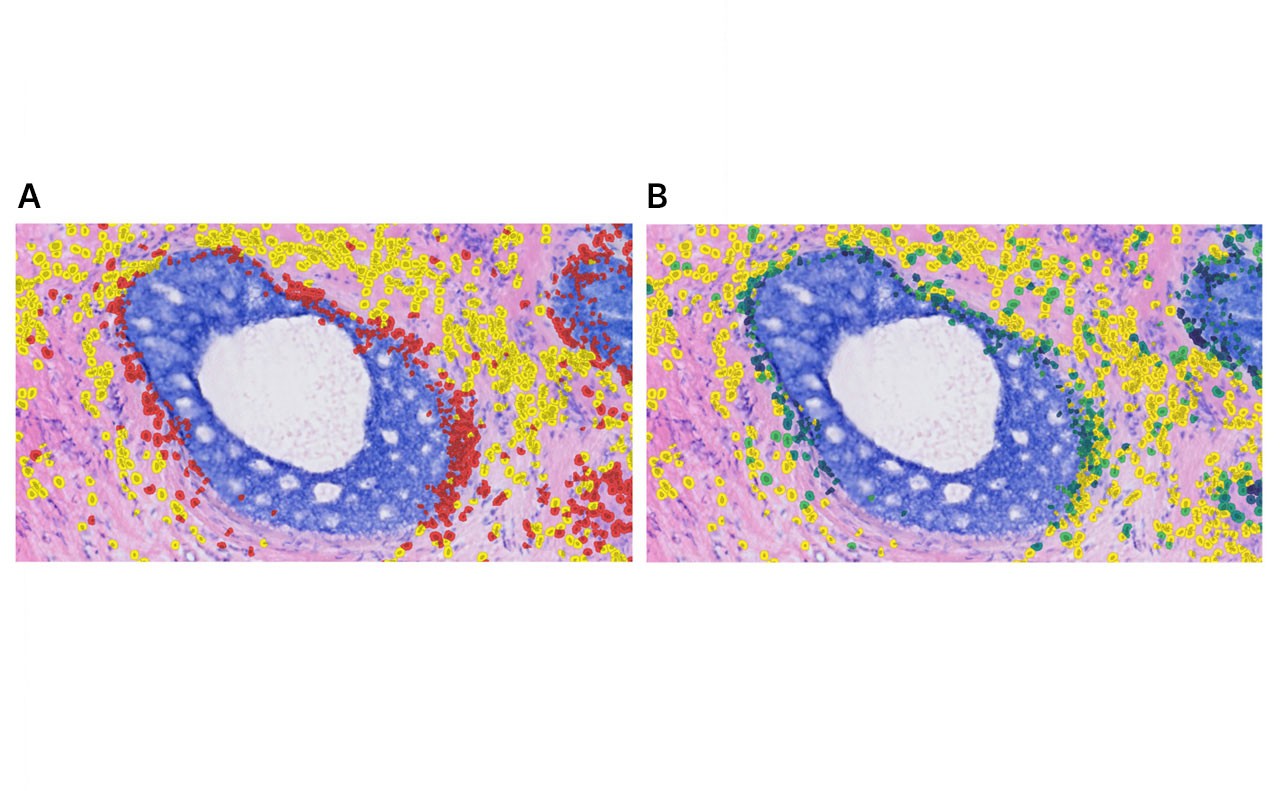
Illumina StrataMap Spatial solution
Build a path to unbiased discovery
Highest spatial discovery power and biological insights at true single-cell resolution

Build a path to unbiased discovery
Highest spatial discovery power and biological insights at true single-cell resolution
The Illumina StrataMap Spatial Transcriptome solution delivers unbiased whole‑transcriptome spatial profiling at true single-cell resolution—combining high sensitivity, large tissue coverage, and seamless integration with Illumina sequencing and analysis to reveal tissue biology in its native context. StrataMap Spatial Transcriptome reveals biology that has not been seen before, with sensitivity, scale, and real-time cellular insights.
Traditional spatial technologies force researchers to choose between gene coverage and spatial detail. StrataMap Spatial eliminates that tradeoff by delivering true cellular‑level spatial resolution in intact tissue sections for any eukaryotic species. Enabled by a sequencing‑based, poly(A) capture approach and high‑density 1 µm spatial features, the technology preserves precise cellular context. This allows researchers to resolve cell states, interactions, and tissue architecture with clarity.
Built to integrate seamlessly with standard histology workflows and Illumina sequencing systems already found in many labs around the world, the StrataMap Spatial Transcriptome solution eliminates the need for new specialized capital equipment. The result is a faster path to discovery and broader access to spatial biology across individual labs, shared service facilities, and service providers.

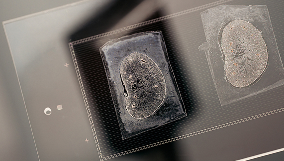
Tissue samples are cryo-sectioned and placed onto the capture surface to preserve native spatial organization. High‑resolution imaging captures tissue morphology.

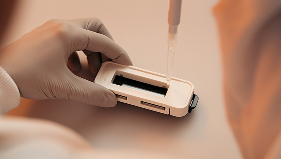
Spatially encoded transcripts are captured from the tissue and converted into sequencing‑ ready libraries.

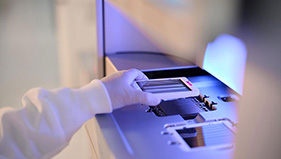
Prepared libraries are sequenced to generate high‑quality spatial gene expression data.

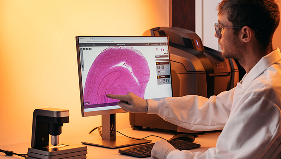
Analysis translates spatial sequencing data and images into biological insight, revealing cell populations, states, and interactions within the tissue microenvironment.
Biology does not exist in fragments, and neither should spatial analysis. StrataMap Spatial Transcriptome features a large, flexible capture area that enables researchers to analyze extensive, intact tissue sections within a single experiment—preserving valuable biological information on the spatial context of gene expression across cells, tissue structures, and organs. The platform maintains gradients, microenvironments, and long‑range interactions that are often disrupted or lost with smaller capture formats, resulting in a more complete and faithful view of tissue organization.

Industry-leading large format capture area
The industry‑leading capture area exceeds that of other spatial transcriptomics platforms. By offering more capture surface per slide, the StrataMap Spatial solution enables profiling of substantially more tissue and cells in a single experiment.

Large capture area enables comprehensive tissue profiling
Multiple mouse heart tissue sections are profiled on a single slide, enabling the spatial analysis of over 600,000 cells across 12 tissue sections. From left to right, sections alternate between virgin and pregnant mouse tissue (V, P, V, P, V, P). Bottom and top rows are replicates.

Profile different tissue types on the same slide
Spatial expression heatmaps from a mouse tissue microarray display the large, flexible capture area, enabling simultaneous spatial profiling of multiple tissue types on a single slide. The StrataMap Spatial solution delivers more tissue, more cells, and more biology per slide by accommodating diverse tissues and replicates in one experiment.
The StrataMap Spatial Transcriptome solution pairs its advanced assay with integrated cell segmentation, spatial visualization, and downstream analysis. By helping researchers move seamlessly from raw data to interpretable results and reducing complexity without reducing rigor, the result is faster, more confident interpretation.
Sequencing data are processed with the DRAGEN StrataMap Spatial pipeline to generate spatially resolved gene expression matrices. This high‑resolution spatial data is then interpreted and visualized in Illumina Connected Multiomics, with tools for clustering, cell-type identification, and exploration of gene expression within tissue context. The platform simplifies complex workflows by enabling interactive exploration, filtering, and tertiary analyses such as differential expression, marker discovery, and cell typing.

StrataMap Spatial software workflow
The StrataMap Spatial software workflow seamlessly transforms spatial sequencing data into biological insight. Beginning with tissue images and sequencing output, the workflow integrates spatial mapping, cell type annotation, and gene expression analysis to reveal how cells are organized and interact within their native tissue context.

Powerful tools for data insights
This figure showcases the Illumina Connected Multiomics (ICM) Spatial Analysis interface, illustrating an intuitive, insight‑driven workflow for exploring spatial biology in a mouse kidney sample. Integrated visualizations spanning spatial domains, cell type relationships, dimensionality reduction, and gene expression patterns enable users to seamlessly connect tissue morphology, cell identity, and molecular signal.
Illumina spatial technology captures polyadenylated RNA transcripts on a substrate. The workflow begins with cryosectioning, H&E staining, and brightfield imaging. RNA is captured on barcoded slides and sequenced, then combined with barcodes and tissue images for spatial mapping.
Learn how the Illumina StrataMap Spatial solution can amplify your insights.